· Nova Machinery Team · Sourcing Guide · 7 min read
How Plant Buyers Spec a CRB600H Cold Rolling Mill
Spec a CRB600H mill from inlet rod and φ6–φ12 bar, then choose Type 300 vs Type 285, take-up, and finishing cells before steel is cut. Layout-based RFQ for US and EU plants.
A cold-rolling line is not a catalog SKU you drop into an empty bay. Plant buyers who treat mill photos as a specification end up with a footprint that does not match the pit, a take-up that does not match the bar program, or a finishing cell that has to be retrofitted after the first coil. Spec work happens before steel is cut.
This guide is for mill managers, plant engineers, and procurement teams sourcing a CRB600H high-ductility two-ribbed bar line. It walks through inlet rod, the published φ6–φ12 envelope, Type 300 versus Type 285, take-up, and mill-exit finishing cells. Use it to write an RFQ that a mill OEM can actually layout. Browse the rolling mill catalog and machine specs first, then send the brief through the inquiry form.
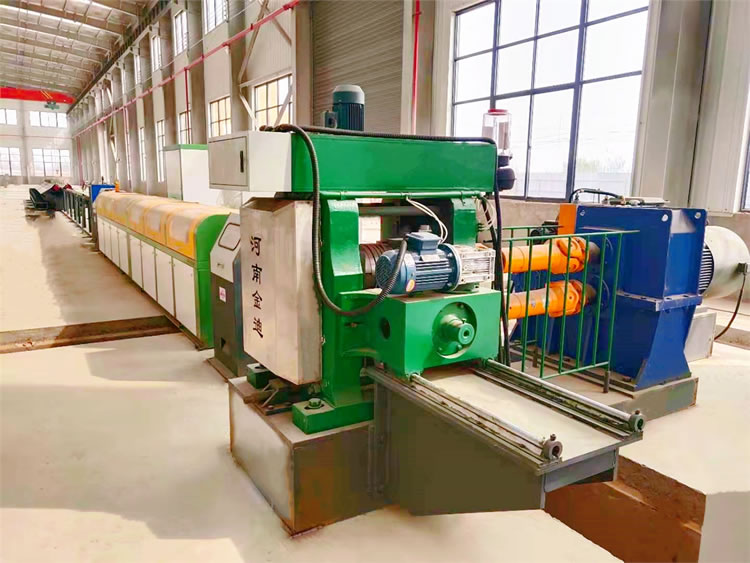
Start with the bar program, not the mill photo
Every layout decision traces back to what leaves the mill. Confirm four items in writing before you compare frames:
- Inlet rod — grade, diameter band, coil vs. straight, surface condition, and whether the rod is bought-in or produced in-house.
- Finished bar — high-ductility two-ribbed bar in the published φ6–φ12 range, CRB600H class.
- Form of delivery — coil, straight bar, or a mix across shifts.
- Duty — annual tonnage target, hours of operation, and whether the line is a greenfield cell or a replacement inside an existing shop.
Do not invent a capacity number to fill a spreadsheet. Share the tonnage you actually plan to run and the hours the shop will staff. Nova Machinery Supply quotes by line after those inputs, not from a generic tons-per-hour table.
Patent ZL 2012 2 0055389.6 covers the high-ductility two-roll mill used on this program. If your target grade sits outside CRB600H or the diameter sits outside φ6–φ12, say so on the RFQ so the layout is not forced onto the wrong mill family.
Inlet rod: what the mill actually has to swallow
Cold rolling does not forgive vague inlet. A Type 300 or Type 285 line is sized around rod that can be drawn and rolled into two-ribbed bar in the published range. Ask your melt shop or rod supplier for:
- Nominal rod diameter and tolerance, not a marketing size.
- Carbon and residual chemistry that your CRB600H program requires.
- Coil weight and inner/outer diameter if the mill will uncoil continuously.
- Scale, rust, and ovality notes — these affect descaling and first-pass load more than brochure horsepower.
If inlet is mixed (two rod sources, two coil sizes), freeze the worst-case coil for layout. The mill, the payoff, and the first stand have to clear that coil, not the average coil.
Type 300 vs Type 285
Both frames are CRB600H mills. The difference is scale and footprint, not a different bar standard.
Type 300 mill line
The Type 300 is the complete 6th-generation cold-rolling line for φ6–φ12 high-ductility two-ribbed bar. It is quoted as a layout: stands, drives, touchscreen central control, take-up, and mill-exit cells drawn together. Choose Type 300 when the plant wants a full line in one freeze — not a stand plus leftover finishing from another vendor.
Type 285 medium mill
The Type 285 is the medium-capacity option for plants that need CRB600H output without a Type 300 footprint. Layout, drives, and take-up are still quoted together. Choose Type 285 when bay width, crane coverage, or civil works cap the line length, or when annual tonnage does not justify the larger frame.
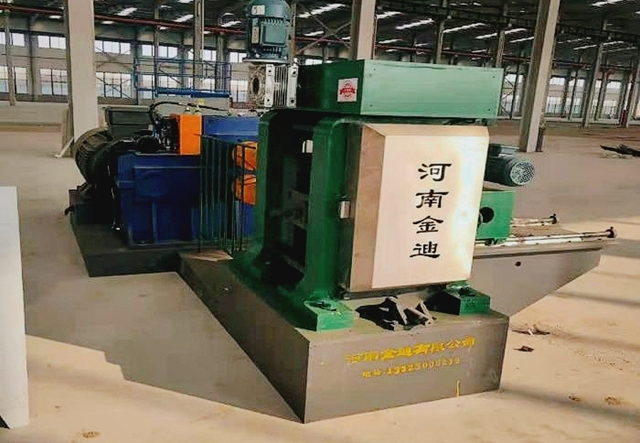
How to choose without a fake capacity table
Use plant constraints, not invented throughput:
| Decision input | Points toward Type 300 | Points toward Type 285 |
|---|---|---|
| Bay / pit | Room for a complete line | Tight footprint, existing columns |
| Bar program | Full φ6–φ12 mix, coil and straight | Same grade, smaller civil envelope |
| Finishing | New straightener, bend cell, collector | Reuse some mill-exit equipment |
| Project type | Greenfield or full replacement | Mid-scale upgrade |
Voltage, operator-language HMI, and PLC options are quoted with the line on either frame. Do not assume a China-domestic voltage will match a US or EU plant.
Take-up: coil versus straight bar
Take-up is not an accessory. It is the mill-exit decision that sets coil diameter, bundling labor, and whether you need a collector at all.
Automatic hot take-up
The automatic hot take-up is in the 300 / 600 m class for mill-exit coiling. It is quoted with a new mill or as a replacement take-up on an existing line. Spec it when the commercial product is coil: construction-steel distributors, mesh plants, and shops that pay out coil into downstream straighteners.
Confirm on the RFQ:
- Target coil mass and outer diameter limits for your forklifts and stillages.
- Whether take-up is one-sided or needs a spare drum for changeover.
- How the coil is banded, tagged, and moved out of the mill bay.
Straight-bar collector
The intelligent straight-bar collector is for mill-exit bundling on CRB600H straight-bar programs. It reduces manual stacking. Spec it when the product is cut-to-length bar for yards, stirrup shops, or cut-and-bend cells — not when everything ships as coil.
Many plants run both: hot take-up for coil SKUs and a collector for straight-bar shifts. That mix has to be on the layout freeze, because mill-exit conveyors, guards, and operator positions change with the mix.
Finishing cells at mill exit
A mill that only rolls is unfinished work. Decide the cell mix in the same RFQ as the stands:
- CRB600H straightener — mill-exit or independent cell. Straightness and cut length are quoted from your bar program.
- Straighten-and-bend cell — automatic straighten plus stirrup bend for construction-steel yards. Pair with the mill or run standalone.
- Collector — as above, for straight-bar bundling.
If you already have a straightener that can hold CRB600H duty, say so. Catalog finishing cells are available as mill-exit upgrades without a new mill — see the wholesale catalog machines path. If you do not have a cell, do not leave “finishing TBD” on the layout. TBD finishing is how plants discover they have no room for the straightener after the mill is grouted.
A separate guide covers straightener vs straighten-and-bend vs collector vs hot take-up in more detail.
What belongs in the RFQ
Send one package, not a photo and a request for “best price”:
- Inlet rod grade, diameter, and coil or bar form.
- Finished size band (inside φ6–φ12) and CRB600H confirmation.
- Coil vs straight-bar mix and any stirrup program.
- Annual tonnage target and operating hours — as a planning figure, not a guaranteed output.
- Plant voltage, frequency, and preferred operator language on the HMI.
- Bay drawing: length, width, crane hook height, pit if any, inbound rod path, outbound coil/bar path.
- Which finishing cells are new vs reused.
- Destination port, packing preference, and whether FAT will be attended.
Nova Machinery Supply is a mill OEM with a manufacturing base in Jiaozuo, Henan. Custom mill programs — layout, voltage, take-up, and commissioning — sit on the OEM manufacturer hub. MOQ is quoted by line. Lead time is quoted after layout freeze. Quotes go out on working days; there is no published same-day SLA.
How a layout-based offer is built
After the RFQ lands, the useful sequence is:
- Clarify bar and inlet — reject or flag anything outside the published envelope.
- Pick the frame — Type 300 or Type 285 against footprint and duty.
- Draw mill-exit — take-up, collector, straightener, or bend cell.
- Freeze the layout — civil, electrics, and crate list reference this drawing.
- FAT and packing — workshop dry run against the freeze, then sea crates.
- Commissioning and spares — start-up support and a spare-parts handoff scoped on the same offer.
Do not skip the freeze. A price without a frozen layout is not a mill offer; it is a conversation. When the bay drawing and bar program are ready, request the mill quote and attach the drawing.